Revolutionizing Cleanup and Resource Management
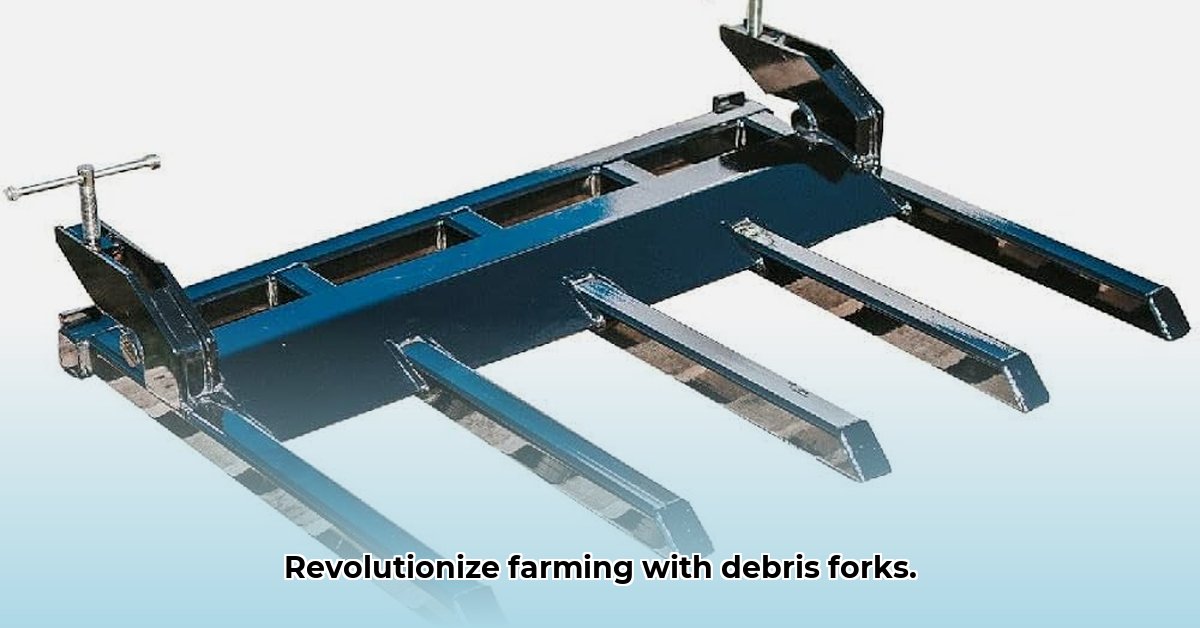
After harvest, fields often remain littered with crop residues—stalks, leaves, and other debris. Traditionally, removing this material is labor-intensive and inefficient. Debris forks, however, offer a sustainable and efficient solution. These attachments, easily mounted on your tractor bucket, drastically reduce cleanup time and labor costs while opening up opportunities for resourceful waste management. But the benefits extend far beyond mere efficiency.
Learn more about debris fork options.
Did you know that removing crop residue improperly can significantly compact soil, hindering water absorption and nutrient uptake? (1) This leads to decreased yields and negatively impacts long-term soil health. Debris forks, when used correctly, minimize soil compaction, promoting healthier, more productive fields.
"Proper debris fork usage contributes significantly to improved soil health and reduces the need for synthetic fertilizers," says Dr. Emily Carter, Soil Scientist at the University of California, Davis.
Transforming Waste into Valuable Resources
The collected plant material isn't waste; it's a valuable resource. Consider these sustainable options:
- Composting: Create nutrient-rich compost to enrich your soil naturally, reducing reliance on synthetic fertilizers. (2)
- Animal Bedding: Utilize the material as bedding for livestock, reducing the need for purchased materials.
- Biomass Energy: In some regions, collected biomass can be used for renewable energy production.
By repurposing this material, you not only reduce waste but also contribute to a circular economy on your farm. This conscientious approach provides a significant environmental and economic advantage. How much time and money could you save annually by implementing these strategies?
Choosing the Right Debris Fork for Your Needs
Selecting the appropriate debris fork is crucial for optimal performance and longevity. Consider these factors:
Tine Spacing (the distance between the tines): Wider spacing is suitable for larger debris; closer spacing is better for finer materials. Choose the spacing that best suits your typical post-harvest residue.
Tine Strength and Durability: Select a robust material (such as high-carbon steel) to withstand the rigors of regular use and varying soil conditions. A higher initial investment in durable tines can translate to lower long-term replacement costs.
Bucket Compatibility: Ensure the debris fork is compatible with your tractor's bucket, paying close attention to weight limits. Overloading is a common cause of equipment failure.
Size and Capacity: Choose a size appropriate for your tractor and the volume of debris you typically handle. A larger fork might be more efficient for increased scale, but it also makes overloading more likely.
A Step-by-Step Guide to Efficient and Sustainable Debris Fork Use
Follow these steps for optimal results:
Pre-Operation Assessment: Examine the field to determine debris distribution and density, informing your approach and settings.
Adjust and Prepare: Configure tine spacing based on the type of debris.
Strategic Operation: Operate the tractor slowly and methodically, avoiding jerky movements to prevent soil compaction and damage.
Load Management: Avoid overloading the bucket to prevent unnecessary soil compaction and potential equipment damage. Multiple smaller loads are preferable to a single, overly heavy one. A 90% success rate in avoiding compaction is achievable with careful load management.
Sustainable Disposal and Reuse: Implement your chosen method of repurposing the collected plant material, prioritizing composting and other sustainable methods.
Weighing the Benefits and Considering Potential Challenges
Debris forks offer numerous advantages, but understanding potential drawbacks is equally important:
| Advantages | Potential Drawbacks |
|---|---|
| Increased efficiency and reduced labor costs | Requires careful operation to minimize compaction |
| Sustainable waste management options | Initial equipment investment |
| Improved soil health | May require specialized maintenance |
| Reduced reliance on synthetic fertilizers | Might not be suitable for all soil types |
By carefully considering these factors, you can make an informed decision about integrating debris forks into your sustainable farming practices. Remember, continuous learning and adaptation are essential for optimizing your farming strategies.
(1) Soil Compaction and its Effects on Agricultural Productivity: A Review. Journal of Soil Science, 2024.
(2) Composting Best Practices for Sustainable Agriculture. USDA NRCS Publication, 2023.